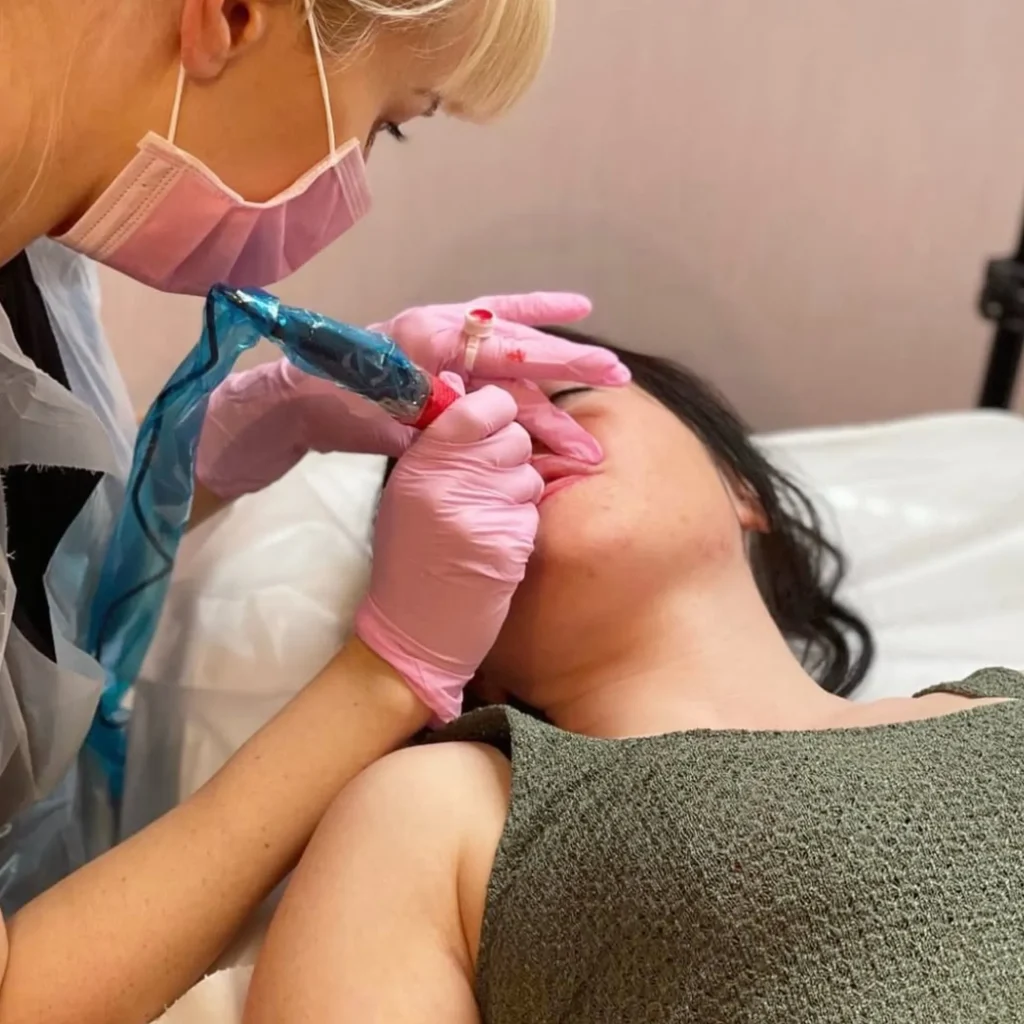
Do not expect to find a single national rulebook for Infection Control Requirements For Beauty Treatments Australia 2026 on some shelf. The way it is, beauty enterprises in Australia are obliged to observe standard precautions and the public health dictates of their state or territory for any service that involves the skin or personal appearance; put more simply, when a treatment is going to break the skin, controls have to be of a higher order.
There is no room for manoeuvre on the fundamentals if one has a salon, mobile operation, piercing room, or studio for cosmetic tattooing and microblading. Hand hygiene, PPE, the right premises, staff training, keeping records, and where it is called for, sterilisation, disinfection and cleaning, as well as the safe handling of sharps, are all mandatory.
I am Rhys Simmons and I can tell you this is a subject that is rather dull until an inspection comes round or there is a complaint, or worse, a preventable infection on your hands. To be compliant in 2026 requires a grasp of the national principles and then a look at what is needed by way of a licence, registration or skin penetration permit NSW, VIC, QLD and the like. Do not be under the impression a well kept waiting area with a candle will pass muster for infection control.
Why This Matters Now
For the health department and councils it is not merely a case of filing away some paperwork. It is about shielding clients from cross-contamination born of a hasty shortcut, fungal spread, bacterial infections and blood-borne viruses.
One gets caught out by the fact that a business may put waxing, facials and brows in with ear piercing and cosmetic tattooing. They are under the same roof but the requirements the 2026 regulations call for are not uniform.
A Change In Practice
Gone is the “we will give it a wipe and she’ll be right” mindset. What you see now is an evidence-based way of doing things that will stand up to an inspector. There is a good deal of stress put on being able to account for who did what and when, on reprocessing and the competency of your staff, as per industry guidance. With cosmetic tattooing in particular, once you have blood or other body substances to contend with, the standard for microblading and the like goes up a notch.
The Rules And Who Is Subject To Them
You will come under the regulatory net if you offer personal appearance services. The states and territories put it in different words but the scope is wide enough to include nail techs, body piercers, home-based operators, salons and beauty therapy rooms. Some small operators make the mistake of thinking the rules are for the big clinics only. A spare room with a treatment bed is still open to council oversight and public health regulation.
Risk Levels
Any procedure with a blade, needle or tool that could come into contact with non-intact skin or blood is considered higher risk, whether it is microblading, body piercing or cosmetic tattooing. That means more exacting cleaning and sterilisation for the therapist. You will not need to go to the same lengths with instrument reprocessing for a hairdressing job or putting on some makeup, though infection prevention is still part of the equation.
Adhering To National Principles
Start with the national principles common to healthcare and personal services before you get bogged down in the state rules. Risk assessment, standard precautions, hand hygiene and environmental hygiene and avoiding exposure to blood and body substances are the foundation of safe practice. Too often a salon will overcomplicate the details, have fancy labels for storage but if the staff cannot tell you when to clean and when to sterilise, from a compliance angle they are in trouble.
Cleaning, Disinfection, Sterilisation
They are not the same thing. Cleaning is for getting rid of organic matter and visible dirt. Disinfection is to put down disease-causing micro-organisms. Then there is sterilisation which obliterates microbial life and is what is needed for critical reusable items in a skin penetration procedure.
With microblading the best course is to use disposables and single-use instruments. Should you employ a reusable one that needs to be sterilised, you must have the reprocessing to show for it and a validated autoclave process.
Standard Precautions Put Simply
It is a matter of assuming there is an infection risk with every client, irrespective of what anyone tells you. Proper PPE, clean linen, the handling of waste in a safe manner and any spills or sharps being put right away are all part of it. As is the wearing of gloves where blood or other body substances might come into contact, and hand hygiene on either side of a client.
The Australasian College for Infection Prevention and Control (ACIPC) has a risk-based framework to back this up and you will find the same logic in state guidance for personal appearance businesses. It is not the most exciting of matters until the day it saves your business, at which point it seems very sensible.
State Rules By Location
You will not find an identical licensing and registration regime across Australia’s beauty industry. In practice the onus is on the health laws of the various states and territories, local councils and the rules that govern skin penetration and personal appearance.
In 2026 one does well to consult the state health department before the local council. The principles of infection control may be much the same but in Victoria, NSW, Queensland, South Australia, Western Australia, the ACT, Tasmania and the NT there are differences in how things are administered and worded.
| State Or Territory | Main Compliance Focus | What Commonly Catches Operators Out |
| Victoria | Local council registration for prescribed accommodation and some personal care body art premises, plus health guidance from Victoria Department of Health | Assuming beauty services never need council involvement |
| NSW | Skin penetration procedures regulated under public health law, with notification and local council oversight in many cases | Not notifying council before offering higher-risk procedures |
| Queensland | Higher risk personal appearance services framework under public health legislation | Confusing ordinary beauty work with higher risk personal appearance services |
| South Australia | Infection control obligations under public health expectations and local government enforcement pathways | Weak record keeping for equipment reprocessing |
| Western Australia | WA Health guidance and local government administration for skin penetration businesses | Home-based operators missing premises requirements |
| ACT | ACT Government public health obligations for personal services | Inadequate sharps disposal and sink access |
| Tasmania | Council and public health compliance for skin penetration style services | Outdated local advice relied on without checking current requirements |
| NT | Territory health and local rules, with extra practical issues for remote servicing and transport of sterile stock | Maintaining sterile storage during travel and heat |
Where To Verify Current Rules
For a current Victorian starting point, the Victoria Department of Health infection prevention and control resources are an official place to start in Victoria. You can get like for like from NSW, Queensland, SA and WA Health or the ACT Government. But do check with your council too for the latest on registration and inspection, as the way things are done locally is subject to change. An inspector is not going to be won over with “I was under the impression my trainer would have got to that”. Nor should he be.
Skin Penetration Done Properly
When a treatment involves cutting, scratching or abrasing the skin, infection controls have to be of a higher order. Aseptic technique, single-use instruments, PPE and the like are no longer just good practice but essential.
Rhys Simmons has met with operators of microblading and cosmetic tattooing who thought a wipe of disinfectant on a metal tool was sufficient for the next client. If sterilisation is called for it is not. That is a major risk in that line of work.
Single-Use And Reusable Items
Dispose of your single-use items once they have served their purpose. Be it applicators, pigment caps, needles, barrier films or gloves, treating them as disposables is the best way to avoid reprocessing risk.
A reusable instrument used in skin penetration has to be put through its paces: a thorough cleaning then sterilisation in an autoclave for any critical item. There is packaging, load separation, cycle validation and storage to consider. Without process discipline a top of the range autoclave is as good as a tinnie with no fuel.
Technique, PPE, And Setup
It is as much about the operator as the equipment. Gloves are no substitute for hand hygiene. Where there is a splash risk you may need an apron, mask or eyewear. Keep your treatment zone in order so that sterile stock is not mingled with what is contaminated.
Clients will be looking at the decor but an inspector is after the sink access, the sharps container, the workflow from dirty to clean and if staff are contaminating bottles with their gloved hands. The latter is all too common.
Records That Save You
They lend consistency and when trouble comes along they are your protection. Should a council call in, or there is an allergy, a complaint or an infection on the cards, the documentation will make plain what happened. Standard precautions outlined here provide essential guidance for maintaining safety and compliance in beauty treatments across Australia.
It is not the most ostentatious businesses that stand up to scrutiny. The ones that do are those who can put forward their incident records, sterilisation and maintenance logs, cleaning schedules, batch or lot records and consent forms in good order, rather than having to dig in a drawer as if for an old takeaway menu.
Documents you will need to have on hand
- Consent and client consultation forms with aftercare advice and medical history
- A schedule of daily disinfection and cleaning for any shared surfaces or treatment areas
- Sterilisation log per autoclave cycle (date, results, operator and load)
- Records of clinical waste and sharps disposal, as the case may be
- Incident or exposure reports, staff infection control training and equipment servicing
For a salon doing cosmetic tattooing or microblading it is prudent to have proof of your single-use stock being sterile and the supplier’s particulars. Should there be a contamination issue or product query it goes some way to showing you are in compliance.
What makes a premises pass
The room itself has to be conducive to infection control. One does not have a safe treatment space where you cannot easily clean the surfaces, handwashing is a chore, waste is left in disarray or the lunch is put away next to what is meant to be sterile.
Layout is often underestimated. An attractive fit-out means nothing if the workflow is wanting. Inspectors are after practical things: washable surfaces, equipment in proper order, easy access to handwashing and a sensible division between what is contaminated and what is not.
Typical inspector observations
Sinks, the state of the benches, how linen is handled, toilet access, floor and wall condition, storage, whether chemicals are being used as they should be; all are fair game. They will also want to know that the staff are not at a loss to account for their sanitation methods.
With mobile operations from home, events or markets the logistics of transport and access take on added significance. Reprocessing equipment off-site will invite questions, waste has to be dealt with in a legal manner and sterile items require a place of safety. I have come across operators in regional parts of the country who were found wanting for no other reason than they could not secure parking by the treatment area or had no viable way of getting waste collected.
Training of use
There is more to formal infection control training than ticking a box so one can put some nice photos of a treatment on line. It ought to be relevant to the work being done, skin penetration in particular, and deal with the realities of infection risk instead of theory slides that are half-read while someone is on their phone.
In the matter of costs for a course, the fee is seldom the whole story. Factor in PPE, consumables, microblading training, equipment and waste contracts. For brow artists and cosmetic tattooists make sure the training is in keeping with Australian public health regulation and covers everything from aseptic setup and decontamination to incident response.
Guidance from the industry
You will find the 2024 Infection Control Guidelines for Personal Appearance Services cited as a sound benchmark, as will material from the various state health authorities. APAN and OneBookPlus feature in education circles but it is well to verify the content of any training with the government requirements of the territory or state in question. Where licensing and registration wording is at variance a competent trainer will make clear what local rules apply over and above national concepts.
Penalties
Then there is the matter of non-compliance. An improvement notice, infringement or even prosecution is one thing but the damage to reputation is not so easily put right. Public Health Acts and Regulations differ from state to state but the expectation is uniform: infection control must be documented, active and based on risk.
Enforcement bodies have been less forgiving of vague ways of working in recent years (2023-2026), preferring to see evidence when it comes to higher-risk services and operator competency.
Failings are rarely anything dramatic
More often they are the run of the mill kind of shortcut: an item not suited to re-use is put back in play, hand hygiene is neglected from one client to the next, the sterilisation log is out of date, bottles are contaminated, there is no council notification, the aftercare sheet is too watered down to count for anything or the sterile stock has long since expired. A mistake of that kind is easy to overlook on a Saturday when things are running at full tilt. But put in one complaint and you will have the whole place scurrying for their records as if they were at the footy after a bloke has mislaid his keys.
A Salon Checklist
When compliance needs to be put in order in a day, make the skin penetration workflow, your records, instrument processing, hand hygiene and sharps disposal the priority. The risk is greatest there and it is where an inspector or complainant will first set his sights.
We have put together this 2026 beauty salon hygiene checklist as a practical way to start for the sole trader, cosmetic tattooist, manager or owner. Do not mistake it for legal advice from the state however; if your service mix is anything but straightforward or you are unsure of your standing with the council, seek proper counsel.
- Start by ascertaining which of your services are skin penetrating and if any local approval, registration or notification is called for.
- Make sure clean, sterile and contaminated items are kept apart in a clear and physical sense.
- For invasive work employ single-use instruments and get rid of them properly.
- Put the cleaning, disinfection and sterilisation of every type of reusable instrument to the test.
- You should be checking the autoclave for maintenance and cycle records, storage conditions for sterility and the integrity of packaging.
- Run through the protocols for hand hygiene, PPE, environmental cleaning and how to deal with a spill with your staff, as well as the correct handling of sharps.
- And see that consent forms, training and exposure records, cleaning schedules and aftercare instructions are all up to date.
The bottom line
Compliance in an Australian beauty salon in 2026 is about having controls commensurate with the risk and being able to demonstrate you stick to them. With routine beauty services that calls for standard precautions and good hygiene. Where skin penetration is concerned, you need the right state approvals, documentation, sterile technique and to handle your instruments accordingly.
Rhys Simmons will tell you over a flat white: if there is broken skin or blood or needles or blades in the picture, do not make it up as you go along. Have a system in place that is clean, unremarkable and simple to put under an inspector’s eye. In our corner of the trade, boring is a good thing.
Frequently Asked Questions
What Are The Regulations For Beauty Salons In Australia?
Apart from general health and safety duties, salons are bound by the public health rules of the state or territory for personal appearance services. Skin penetration treatments may require operators to be registered or have the council’s approval, or other measures of compliance. It is best to consult the local council and health department since the law is not uniform across the states and territories.
What Are The Legal Requirements And Standards For Maintaining Infection Control When Performing Beauty Treatments That Penetrate The Skin?
In addition to suitable premises and incident management, you will be expected to have the right consent and aftercare procedures in place. Legally one must observe hand hygiene and use of PPE, dispose of sharps safely, have the environment disinfected and critical instruments sterilised. Single-use instruments are to be used where appropriate and there must be records to prove it. Waste must be handled correctly.
What Is The Recommended Infection Control Method For Modern Salons?
A system based on risk and standard precautions is what is recommended. In effect you regard each client as a potential risk and ensure cross-contamination is precluded by way of sterilisation, disinfection, strong hand hygiene and so on. With higher-risk services the prudent course is to have documented reprocessing and rely on disposable sterile supplies.
What Are The Standard Precautions For Infection Control In Australia?
They are for all clients, not just those with a known infection. This covers hand hygiene, respiratory etiquette, PPE as the exposure dictates, the safe disposal and handling of sharps, reprocessing of equipment, cleaning the environment and dealing with any spills of blood or body substances without delay. Linen and waste management are part of it too.
Do Microblading And Cosmetic Tattooing Need Different Controls From Ordinary Beauty Treatments?
You would want to impose more stringent controls than for non-invasive services given the skin penetration. A more thorough aseptic setup is in order, as are sterile or single-use instruments and detailed record keeping. Local council and public health approval requirements will also warrant closer scrutiny.
More on this: microblading training expenses.
